Transcript
Welcome to Milk Theory, the podcast that decodes the future of food. In each episode, we talk to the innovators and leaders who are shaping the multi-billion dollar dairy industry from processing breakthroughs to sustainable packaging. We'll break down the complex world of food innovation, one conversation at a time.
You are listening to episode four of our conversation with Jeremy Pike, the director of sustainability at Idaho Milk Products about their sustainable practices.
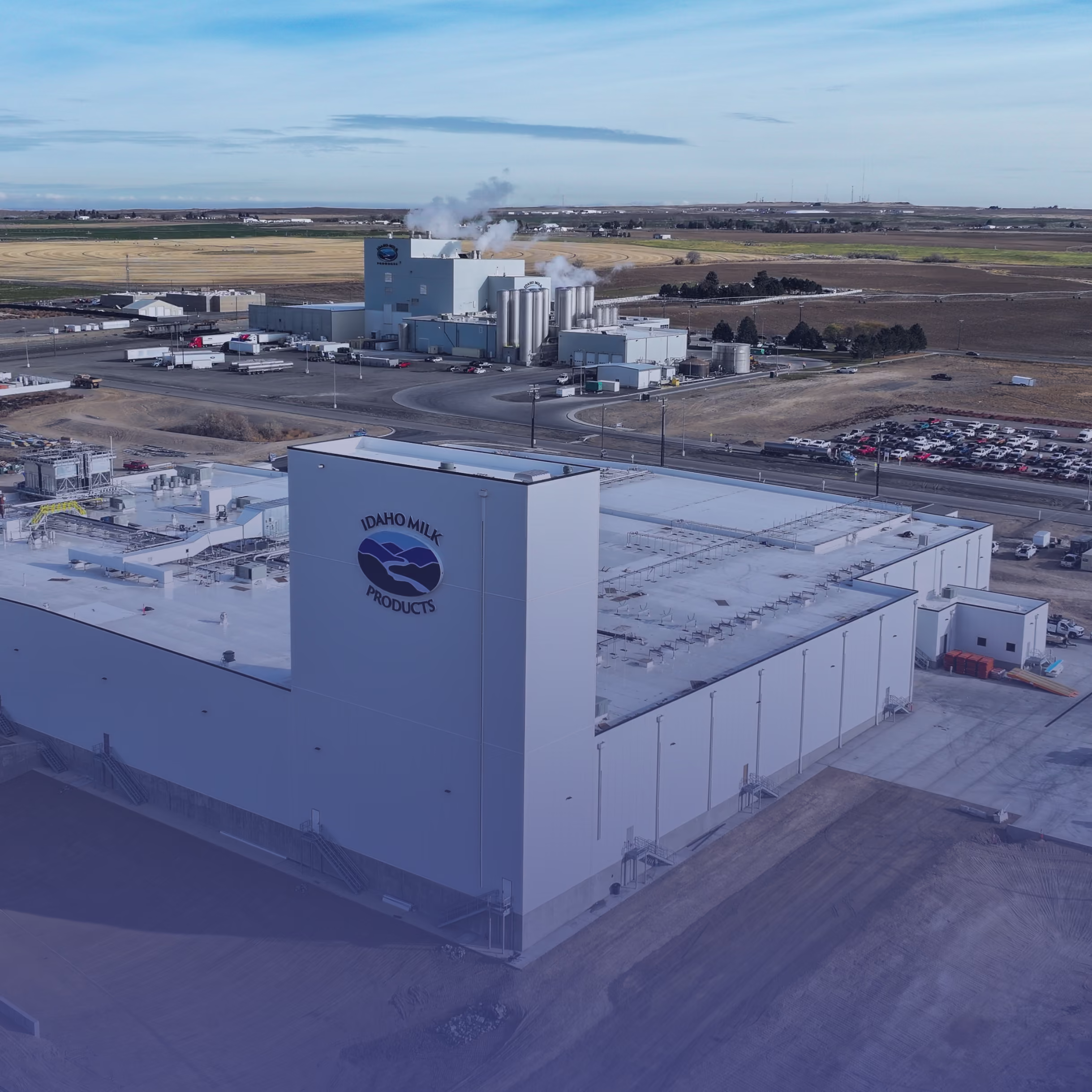
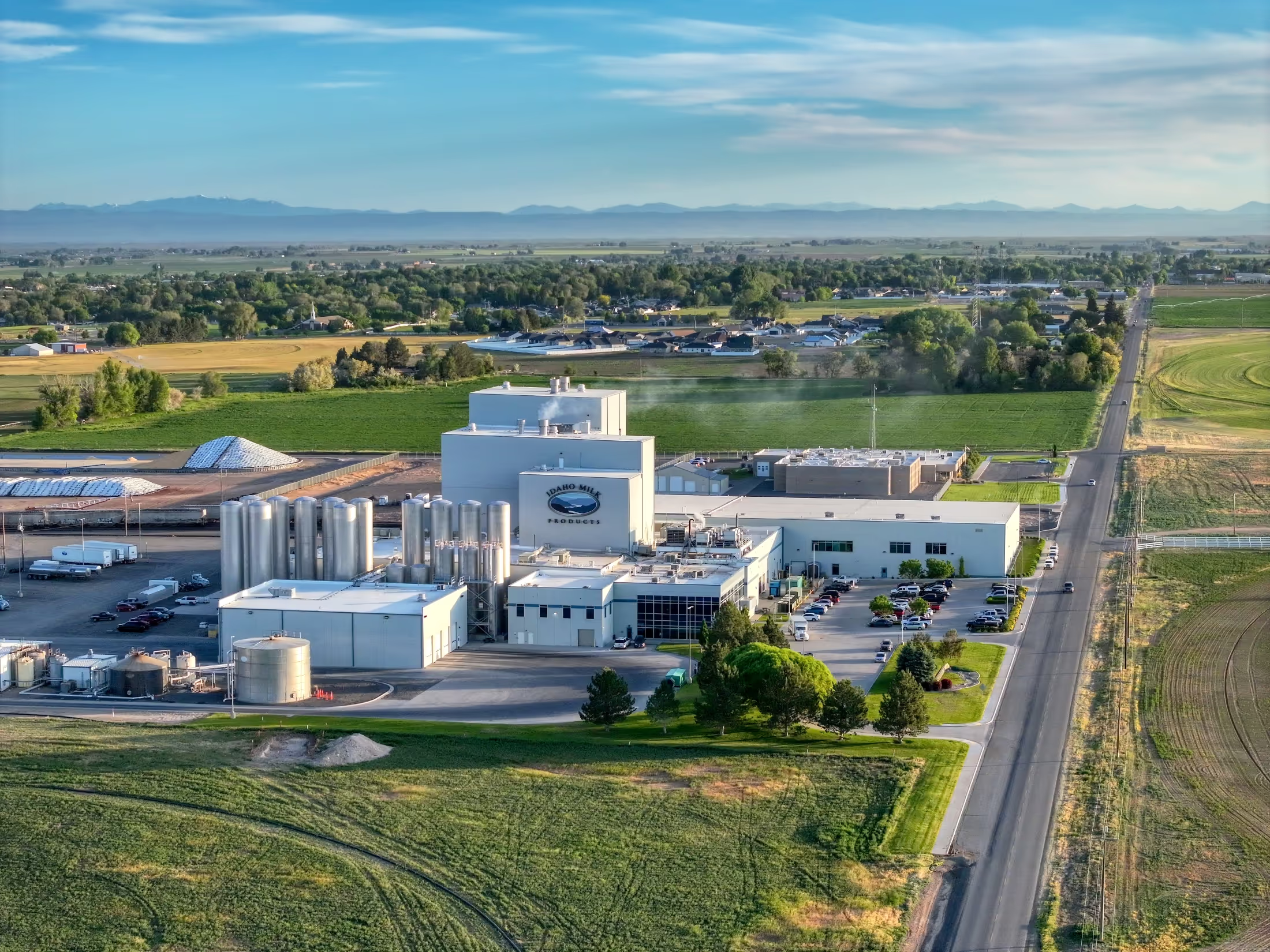
Host - So you have a sustainable way of growing feed, a sustainable way of producing raw milk. That raw milk gets transported by the Idaho Milk Products fleet to the Idaho milk products plant. What sustainable practices are occurring at the plant that are worth highlighting for the Idaho Milk Products sustainability story?
Jeremy - Sure. So a lot of folks are probably familiar with the products that we produce. We didn't really mention that in today's episode, but you'd assume some folks have a general idea. We produce three main products, right? We produce cream, we produce milk, protein, concentrates, isolates, and we produce permeate. Well, in my world, from the sustainability lens, I would argue that we actually produce four and that fourth one being water. So when that raw milk comes in, we're essentially just a giant filter, we're fractionating out those macronutrients of the milk and putting them into their respective buckets for the various purposes. So again, the raw milk comes in, we separate off the cream, and that turns around and leaves within hours of arriving. And so there goes your fat component. So now that skim milk that you're left with that has your carbohydrate and your protein, we run that through membrane filtration to further separate those two streams. And then ultimately, the protein stream gets dried, and that carbohydrate stream gets dried well beyond those two streams, you also have water. And so once the permeate stream that becomes our milk permeate powder, once that split off from the protein side, it essentially runs through a series of reverse osmosis where we're recapturing that water that's already contained within the milk. So milk typically 13, 14% solid, so right, 85, 86, 87% water. We're essentially able to recapture that 86 or 87% water from that milk that's coming in. And then we're actually polishing it to a point where we're able to utilize that in the plant for the next day, the clean in place, the CIP process. And so essentially what that does for us is helps us to minimize our overall water demand from the local municipality here. So from a water withdrawal standpoint, we're reducing the amount of water that we need to run through the plant simply because we're utilizing the water that's already contained in the milk. That's from the water standpoint, from a sustainability lens, again at the plant, and tying it back to those large at scale dairies, their proximity, our internal fleet of trucks, those trucks are going to one site loading that tanker entirely up and coming back to the plant. So from a product safety product quality standpoint, one, it's less than 50miles away, so it's extremely fresh beyond that, it's a full tanker truck. So from a traceability
Host - You know where the problem's coming from.
Jeremy - Yeah, from a traceability standpoint, if there was ever a concern or numbers were out of range, you wouldn't have to go back and you might have four or five or 10 different farms that may be filled up a truck. If you were operating slightly smaller dairies, you know exactly where that milk came from, if there were ever to be an issue. So that traceability piece is huge. The water piece is huge, and really that kind of helps to create part of that complete picture. Beyond that on the backend, from a resource waste management and resource recovery standpoint, any product that we on the permeate side maybe are unable to dry, so that carbohydrate and mineral component of the milk, if we're bottlenecked unable to dry all of what is produced on that stream, we're then able to take that and send it off as animal feed. And about 30 40% of what we supply to that third party distributor actually lands right back on our dairies. And so again, that's kind of another fun closed loop story there. But from an impact standpoint, also helps to increase the efficiency and kind of reduce landfill use. And so again, cows are able to utilize that carbohydrate that the liquid permeate that they're able to get. And then beyond that, we pretreat our wastewater here. And so that pretreatment process creates dairy solids as the water is cleaned, and those dairy solids get hauled off also by a third party and end up using as a soil amendment for land application for essentially a fertilizer of sorts.
Host - Wow, that's fascinating. Okay. So aside from the processing elements, Idaho Milk Products is in a rural community, it's a rather large employer. I know that sustainability, based on what you said earlier in this discussion, branches beyond just quote unquote being green and taking care of the planet, there's also communities involved and building sustainable communities is kind of a part of this mission of what Idaho Milk Products is setting out to do. Can you speak a little bit to that and how either how the business is run or how Idaho Milk Products takes care of the surrounding area and the communities that support it?
Jeremy - Yeah, yeah, absolutely. I think, I don't even know where to begin. I mean, it really starts from the top. Our owners are world-class hands down. They are prominent figures in the community. Again, they operate large businesses in our area, so just inherently, they employ a lot of people in our area. Just stories of some of the different owners and just the longstanding relationships that they've had with different herdsmen or different employees. They have a positive reputation at the ownership level to where you have that loyalty to the business to where maybe the husband and the wife both work for the business and now the next generation's coming on as well. They just love being a part of it. And then aside from the ownership side, their engagement within the dairy community through just local 4-H and fair type of sponsorships and those types of things, obviously very engaged there. And then really for us as Idaho Milk Products funneling down now from the ownership level to our actual business, the same sentiment. The leadership here, extremely engaged. And really for me is it makes my job easy because I have the support. I'm not trying to convince a board that sustainable practices matter. They all have full understanding of why I'm asking for certain data or why there's an interest from a customer to participate in a certain practice, for instance. So at the ownership level, full understanding, full buy-in at the plant level from our executive team, full understanding full buy in. And so we have a really, really strong team, well respected throughout the broader US and global industry as far as for being the face of Idaho Milk Products. Some of our executive folks are very well respected in the industry. And then that helps to create that presence within the industry of, wow, I want to come work at Idaho Milk Products. And so some of the stuff that we do that ties back to community engagement, beyond that direct economic contribution here in Jerome, and here in the Magic Valley, we have, I think last year was$18 million in economic contribution. From a direct standpoint, it's a lot of jobs, and that's a lot of families that both either directly or indirectly can benefit from us operating here in the valley. And then beyond that, I mean a very strong focus on putting people first. We're not just a number. We're very much so a close-knit community here. And again, part of that comes from the fact that we are just the one processing facility currently. So our executive office is also here at the processing plant. So you have that kind of close-knit group. We have total open door policy if you want to walk into the executive team, any of their offices, door's always open. It's not like you have to go through six or seven layers of executive assistants executive assistant to get to the calendar, to get on to talk with someone in leadership. And so very humble group of folks. And then that really just transitions down to the plant, and it's really just a broader mindset. So really one of the main things with both the support from a sustainability standpoint and the focus on workplace wellbeing is obviously employee wellbeing and with employee wellbeing coming safety. And so obviously a big, big push, a core value of safety, always not taking risks, putting a strong, strong focus on making sure that our employees are always working in the safest manner possible, not putting employees in positions that would be unsafe, and making sure that nobody feels rushed to do a job. I think it just simple things like the engineering team does a lot of pushes out and champions a lot of job hazard analysis to be done. And so if you're doing non-routine work, for instance, take a step back. You don't need to complete the work right this second. Take a step back, see what the risks are, understand what the risks are, and make sure that you have the proper PPE. Make sure you have the proper equipment, what have you, and then this way you can do the job the most safe and effective way. And so again, that culture comes from the top and really is ingrained in how we do business.
Thank you for listening to Milk Theory. If you enjoy our conversations, please subscribe so you don't miss any opportunities to dive deep with us into the expansive dairy industry. To learn more about the topic discussed in this episode, follow the link in our show notes. Until next time, have a great day.