Transcript
Welcome to Milk Theory, the podcast that decodes the future of food. In each episode, we talk to the innovators and leaders who are shaping the multi-billion-dollar dairy industry. From processing breakthroughs to sustainable packaging, we'll break down the complex world of food innovation, one conversation at a time.
You are listening to Episode 2 of our conversation with Jeremy Pike, the Director of Sustainability at Idaho Milk Products, about their sustainable practices.
Host - When I surround myself around folks in the dairy industry who are focused on sustainability, I hear the terms scope 1, 2, and 3 dropped a lot. And that is something that was new to me upon entering this field. What are those scopes and is that a good place to start when understanding the sustainability report in your mind like in terms of just like kind of downloading the information and where things fall?
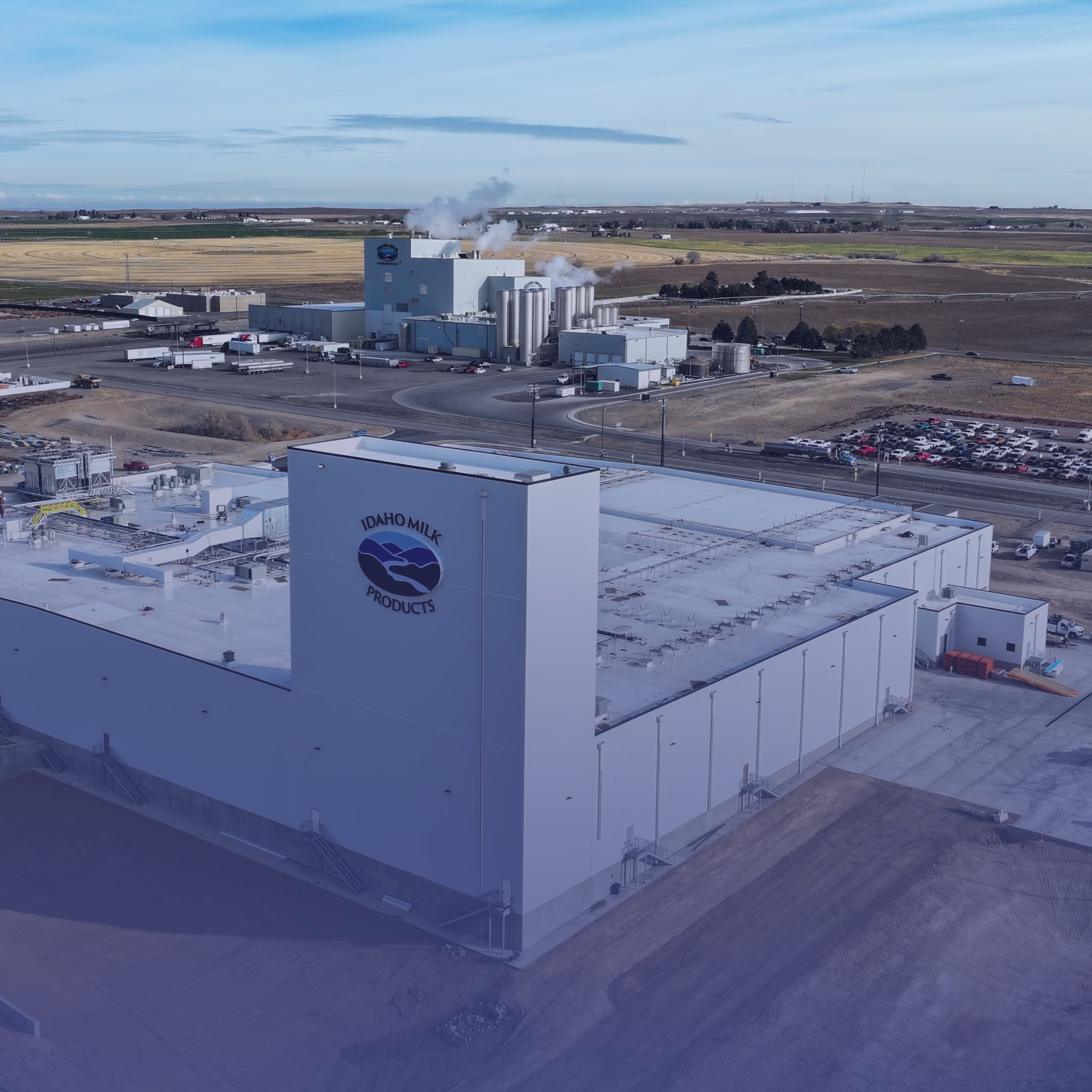
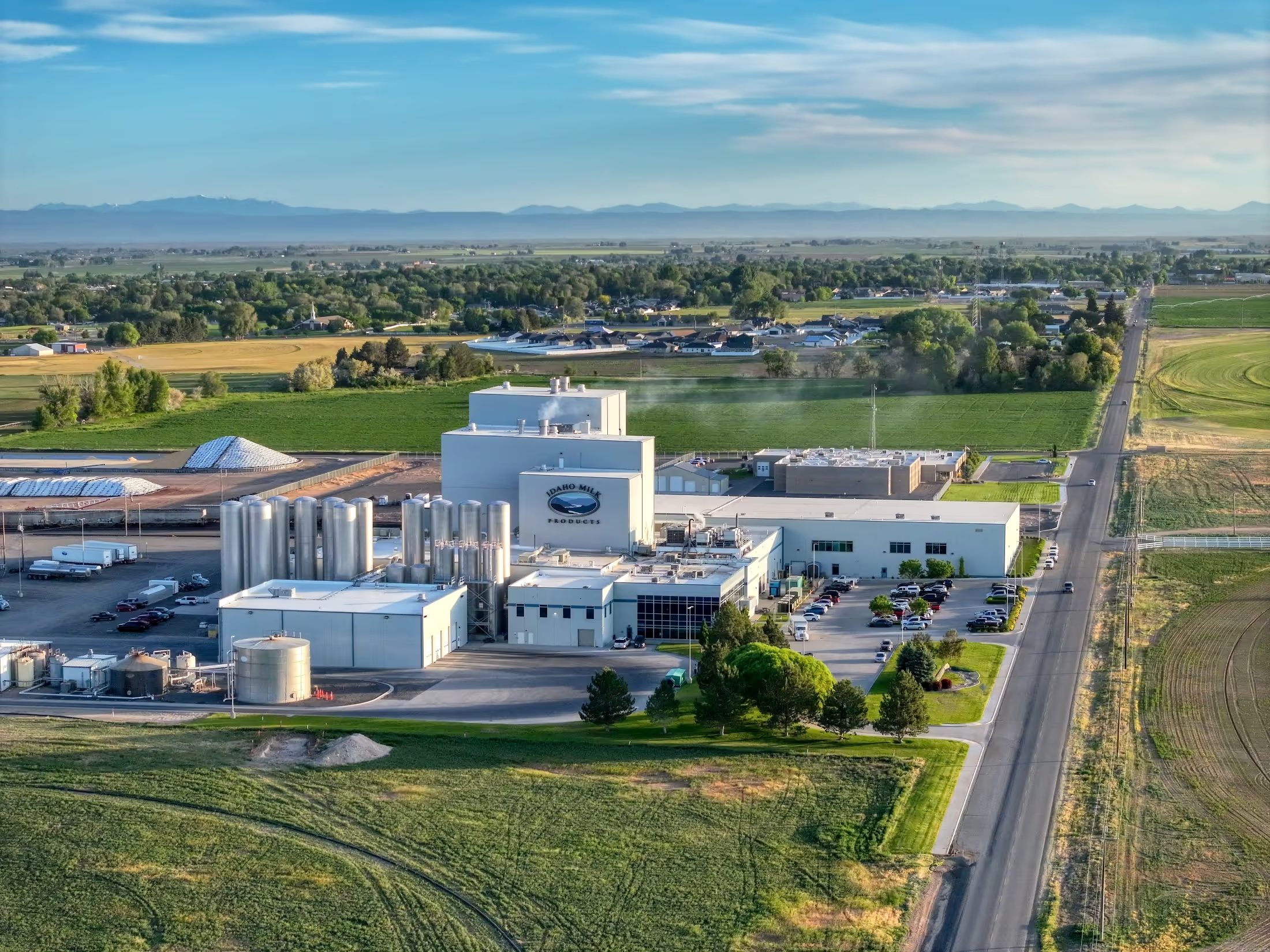
Jeremy - Yeah I mean I think if we're going to look at the sustainability report and funnel it down from the environmental pillar absolutely okay yeah scope one two and three are going to be really kind of just the good level set of of really how how industry or how us as a business or any business that's tracking their emissions is going to categorize their various emissions. So when we look at scopes one, two, and three, scope one, those are those direct emissions that come from us as Idaho Milk Products here at the plant in Jerome from our operations. You know, so think of things here. Again, we're primarily producing powders. We have to dry those powders. So we're using natural gas in our dryers to do so. We also own and operate our own internal fleet of milk hauling trucks, those mobile emissions that come from the diesel trucks running back and forth to the dairies would fall in scope one. You jump to scope two, scope two are those indirect emissions that come from purchased energy, and more specifically for us in our case, purchased electricity. So again, keeping the lights on for Idaho Milk Products falls under scope two. And then scope three essentially is everything else. It's all of those indirect emissions that come from our value chain. So upstream emissions, downstream emissions, And within scope three, there are a number of categories, things like your purchased goods and services. And so in our case, our purchased milk falls in category one of the broader umbrella of scope three. There's different categories as well, such as like business travel, employee commuting, upstream transport, downstream transport, product, end of life. There's a slew of categories and it all ties back to an alignment with an organization called GHGP or Greenhouse Gas Protocol. And so those are the basically the governing body that sets these standards of how companies should be accounting for their emissions so that at the end of the day. You're hopefully on a, on a like for like basis. You know, if you're somebody in the dairy industry and you're somebody in the, in the energy industry, if you're calculating your scope three, category one, purchase goods and services emissions, the inputs though, they will be different. They'll be calculated in the same way. And it creates that apples to apples ability there so that it's just a universal...
Host - It's a universal standard across multiple industries.
Jeremy - Correct. Yeah.
Host - Okay. When you mentioned something, and I want to cover just a question that kind of came up in my head, right as you mentioned the transportation and how Idaho Milk Products owns its own fleet. A lot of folks in the industry, you know, contract elements of their logistics out, such as transportation. Is there a benefit to having that fall under scope one by taking that in? Or is that just something that we do?
Jeremy - So generally, I mean, the short answer is yes. I mean, it's the more data you have, the better and having it under our scope one and having the visibility of that primary data visibility is great from from a GHG, from a footprint, from an inventory standpoint, accounting those emissions, we have access to that usage of the diesel. So beyond that, owning and operating our own fleet positions, the opportunity, I guess I would say, for more immediate progress or improvements, I guess I would say, as far as you think about what opportunities are out there to reduce our diesel usage. So can we do things like either implement a different tractor trailer technology. Whether it be different energy source as opposed to diesel, or are there other efficiency things that we can do within our fleet from the trailer side where maybe we're able to utilize a larger style trailer to that same truck that's running down the road to go to the dairy instead of, say, bringing 60,000 pounds of milk back to the factory? The plant, maybe they're able to bring 80 or 100,000 pounds of milk back to the plant, and so thereby reducing that over-the-road time to go back and forth to that same destination. So I think there's an opportunity there where we have that more direct tie, again, from a data and inventory standpoint, as well as from a mobilization, I guess, not to be, not to pun, but mobilization of implementation of technologies and practices.
Thank you for listening to milk theory if you enjoy our conversations please subscribe so you don't miss any opportunities to dive deep with us into the expansive dairy industry to learn more about the topic discussed in this episode follow the link in our show notes until next time have a great day.