Transcript
Welcome to Milk Theory, the podcast that decodes the future of food. In each episode, we talk to the innovators and leaders who are shaping the multi-billion dollar dairy industry. From processing breakthroughs to sustainable packaging, we'll break down the complex world of food innovation, one conversation at a time.
You are listening to episode three of our conversation with Jeremy Pike, the Director of Sustainability at Idaho Milk Products, about their sustainable practices.
Host - Let's take a look at the farms and look at how their efforts on these farms are contributing to the overall sustainability story at Idaho Milk Products. What can you tell us about that?
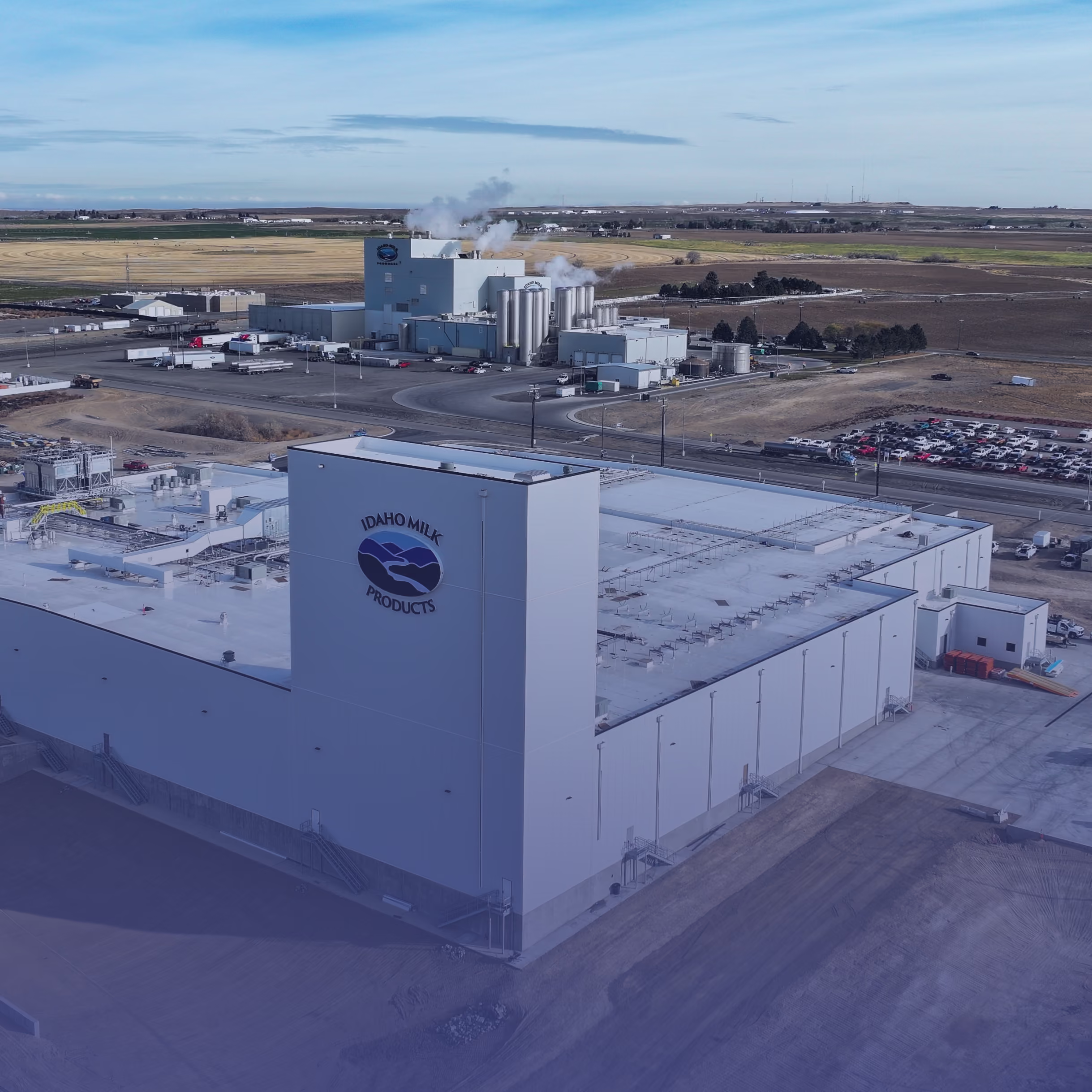
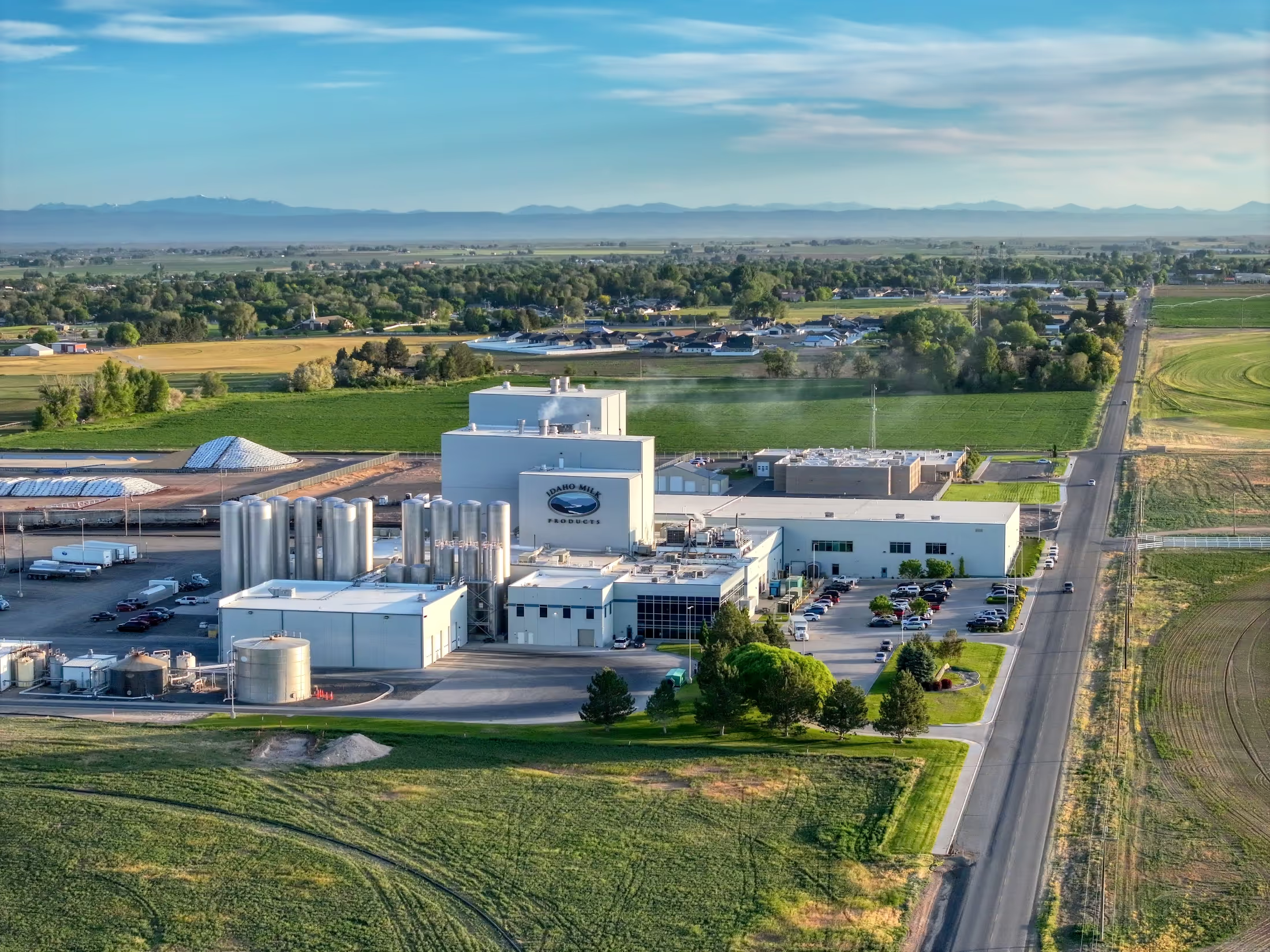
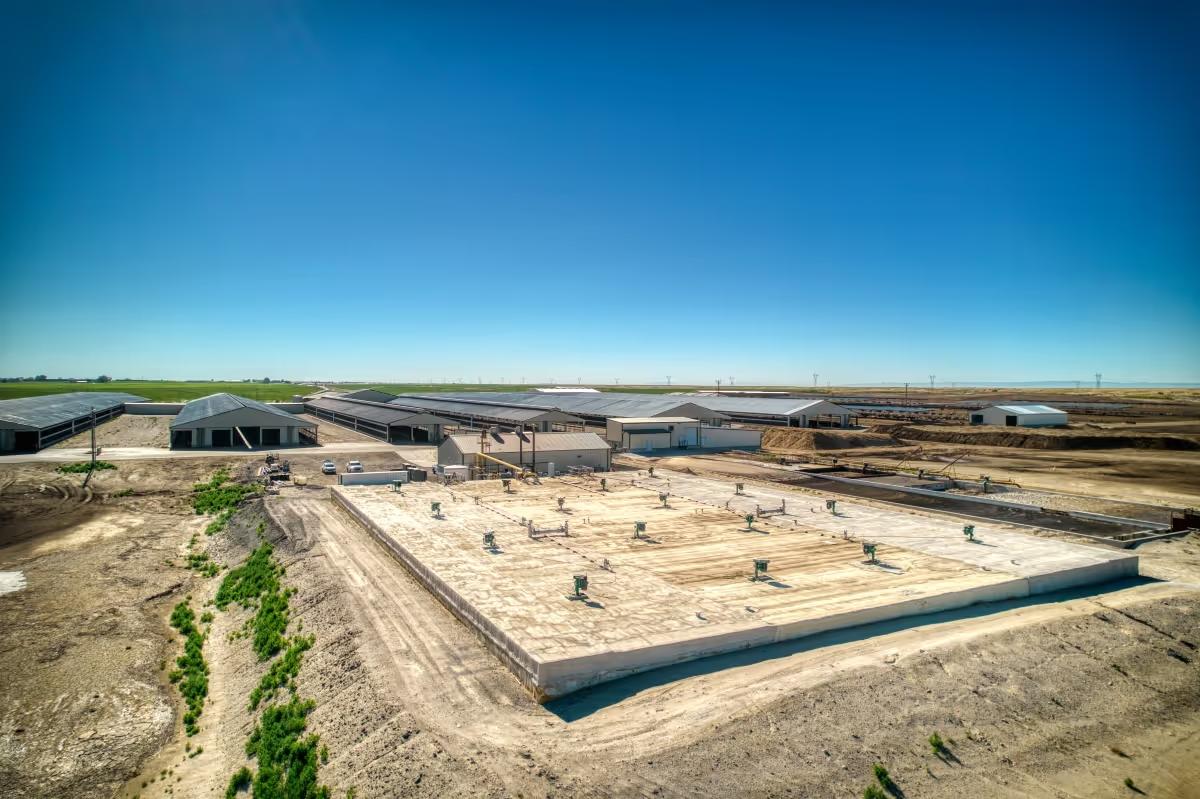
Jeremy - Sure. So I guess first I will step back and kind of give a little bit of a flavor of how our business operates to the extent of which I'm capable of. I'm not a business person, but I will do my best. So we are vertically integrated, you know, so you hear the phrase co-op tossed around a lot in the dairy industry, whereby you've got, you know, a number of farmer owners that come together to supply milk to a processing plant. And so in a similar vein to a co-op, we are vertically integrated. We have three ownership dairies that then funnel down to essentially 12 dairies that then provide the milk for our plant. Those 12 dairies are well positioned and actually our processing plant where we're sitting here today in Jerome is no more than 50 miles away from the furthest dairy. And so I guess first layer of what helps position us to really from an environmental sustainability standpoint, what positions us in a favorable manner is that proximity to those dairies. So again, we're no more than 50 miles from the furthest dairy. Most of the dairies really are within 20 or so, 25 miles of where we're sitting right now. And so that really plays in from, again, the transport standpoint, as well as a freshness and a quality standpoint. Now, when you look at the actual dairies themselves, our dairies operate larger scale for many reasons. And I guess they've been able to continue to flourish and grow to the scale at which they're at currently simply due to their lens on sustainability, their mindset towards operating more efficiently and reducing their impact. And so we have these highly efficient farms that have a variety of different animal housing styles. So, you know, we'll implement from a, I guess I'll back up from a Western United States, the way that you dairy in the Western United States is different than maybe you would dairy in the Midwest or different than how you would dairy on the East Coast. And so just landscape, I mean, think about where we're at here in the Intermountain West between the Rockies and the Cascade Mountain Ranges. We're here in the South Central Idaho high mountain desert, essentially. There are different, you know, again, you think back to resources, different availability of resources and ways that you can leverage that to still run a business. And so what our owners have found to be successful is operating at a larger scale and an efficient scale through different technologies from an animal housing standpoint. So we could talk a little bit about the cross vent barns. And so those essentially are what the name implies. It's a barn. So the animals are under roof and there are cross ventilation and essentially the barn is from an architecture or from a design standpoint is designed to move air through, which does a number of different things that one again, the cows are under roof. So from a temperature standpoint, you know, today it's in the 90s inside a cross vent barn, you might lose, you know, anywhere from 10 to 20 degrees on a sunny day where, you know, you've got a nice breeze blowing and those cows are sheltered from the elements. You know likewise on the flip side in the winter when it's 40 50 mile an hour winds blowing sideways and maybe snow and or rain those cows are instead of being right at freezing outside they're maybe you know in the 40s inside so what we see through that cross vent housing style. Is a smaller delta smaller range from the minimum to maximum temperature inside the barn, With that slight breeze that's created through the design of the barn and the fans that are in there, that breeze also cuts down basically all fly population, I guess, or flies don't like being in the wind. Like you even, you walk around outside on a windy day, do you typically have flies buzzing around you? Not typically. If it's a calm day, you'll see flies. And so obviously on a dairy, you want to manage that. You want to keep the cows comfortable. And so that's one way that that helps to kind of minimize that. So cross vents are one type of technology that we are able to implement here in the Intermountain West. Beyond that, we utilize open lots and we utilize free stall barns. And so again, those free stall barns provide a similar type of cover to what a cross vent barn would be, but more open air, so more exposed to the elements, to the wind. And essentially, then the open lot, as the name implies, is an open lot where there's roof structures for them to step out of the weather if the animal so chooses. But they're a dry lot, essentially, to where they're not on pasture. They're eating a ration.
Host - Okay. Yeah. So the cows aren't grass-fed.
Jeremy - Right.
Host - How does that play into the sustainability story? I thought grass-fed was the sustainable way of raising cattle.
Jeremy - Yeah, so I guess a lot of that, again, comes from consumer perception and a lot of that comes from brand perception or the messages that those on-shelf brands portray to the consumer. The consumer has the, I guess, the vision maybe or through media sees a cow in a tall grass field, you know, bell around its neck, the typical, you know, prancing around. Yeah, Switzerland or European style model. And while that does have its merits, again, regionally and nationally in the United States, the ability to end to end pasture raise grass feed your herd, it's not as available, I guess I would use the word as as a practice as feeding a ration. So again, here we're in the desert. So if you can find a patch of grass that's larger than a city lot that somebody's irrigating for their home. Think about that on a scale for enough to feed a dairy herd that's then producing milk. So just the availability of grass isn't here in our specific area. And beyond that, the leverage that we pull or the lever that we can pull on a ration diet is, again, maintaining from a component standpoint. So when I guess I'll back up a little bit, when we look at milk, we talk about the milk's components. So milk has fat in it, it has protein in it, and it has other solids in it. And so when we're feeding cows a total mixed ration, there's a nutritionist, essentially, just like you or I would have if you were on bodybuilding or trying to lose weight or trying to gain weight or whatever the case might be. You have a nutritionist that totally lays out, okay, here's your macros. This is what you should be consuming and puts it in the right ratios. That's essentially the same thing that a dairy nutritionist is doing for the cows. So you've got a cow that's in milk and she's being fed the optimum nutrition essentially for what she needs in order to produce the milk most efficiently. And so beyond that, a lot of what then goes into the ration beyond your typical forages like alfalfa and those types of things are actually upcycled co-products from other industries. So you think about our area here where we've got large sugar beet facility down the road from us. Well, those sugar beets that are creating sugar and beet pulp as a byproduct. And so our owners are able to procure that spent beet pulp that has come from that sugar process and feed that to the cows. And so the cows are essentially able to upcycle that co-product from something that would otherwise maybe end up in the landfill. They're able to upcycle that and reduce that landfill impact while still providing that nutritious milk. And so I guess it's just a way that the sustainable model has been portrayed. In the past. And I think that, again, there's just the lack of education of a cow that's on a ration that's producing 5% milk fat and 3.6% true protein, and nearly half of what they're eating is co-product of something else that would otherwise end up in the landfill. That's then basically taking things that us as humans can't eat and digest and turning it into a nutritious product to then be turned into a variety of different ingredients or products. You know, I think that there's that more holistic story that can be told from U.S. Dairy, from non-pasture dairy, and just broadly to explain that there's more there than just the happy cow in a pasture eating grass is not the only model that is synonymous with sustainability, you know, and I think you come back to those broader elements. If you want to focus on one specific topic from a soil health or from a water use or from a manure management standpoint. You know, obviously there's pros and cons to each model. There's merits to each type of way of doing business.
Host - So the cows are residing in cross vent barns. They still poop. Where does that go?
Jeremy - Yeah. So in the case of the cross-vent barns, well, in most cases of the cross-vent barns, that manure is ending up going through a process whereby we're separating the solids from the liquids and then essentially creating dry bedding for the cows. And so they'll separate those solids and liquids. Those liquids then will continue on and typically land in an anaerobic digester. And then that anaerobic digester will essentially digest. So anaerobic is outside of the presence of oxygen. So in an anaerobic system lacking oxygen, these microbes are digesting essentially that liquid and then creating gas that then can be further processed. There's microbes in this digester.
Host - Right.
Jeremy - Yeah. I mean, just the natural bugs that will consume that and decompose the material in there and then those the fibrous piece like I said that comes off of the press will will then be essentially an odorless dry fibrous material that can be used as bedding and that's what goes down sanitary too yes yeah clean yeah you you mean if you wanted to stuff a pillowcase with it and sleep on it you could.
Host - Oh my god.
Jeremy - But it is then used to provide bedding for the cows. And again, from that more holistic closed loop sustainability model, you know, that's another kind of just example of maybe how this certain type of dairy has its merits around being a sustainable system.
Host - As opposed to letting cows just go to the bathroom in open air.
Jeremy - Correct. Yeah. I mean, from a manure management standpoint, again, a cow that eats grass versus a cow that eats ration is yeah still going to have to go poop and so by pooping in the cross vent and being able to capture that manure and get it pressed and then stored and in the digester, the time of exposure of that manure in a cross vent system versus. The time of exposure in a pasture-based system, you're talking minutes to, you know, on a cross vent system versus manure. Maybe there is, but to my knowledge, it's not like there's somebody out there running behind the cows, picking up the manure. So, you know, just the emissions that come from that are, you're not able to recapture that energy. And so we're really able to capture that manure and then process it through advanced technologies to then minimize and reduce the overall impact of that manure.
Host - What comes out of the other side of that digester then? Some form of like natural gas or something?
Jeremy - Exactly right. Yes. They'd be producing essentially RNG, renewable natural gas. There are a number of different technologies that will either take the gas and scrub it to run through a generator to feed back into the electrical grid. So we have an example of that on one of the owner dairies. They've got a longstanding digester that essentially is doing just that. So it's digesting that manure. It is creating that natural gas and it's running it through a converted generator, essentially meant to run off of natural gas and creating electricity back to the grid. Beyond that, you have the opportunity to take that collected RNG and pump it back into a pipeline. So we have digesters that are utilizing that technology where they're just taking the gas that's collected, scrubbing it to where it becomes pipeline quality and injecting that back into the network of the natural gas pipeline.
Host - So it's like powering homes, or it could?
Jeremy - Absolutely. Certainly from the electricity side, the digester that I mentioned that is creating electricity back into the grid is about 900 homes per year of energy generation. The RNG can be you know it's it's intermixed with the again broader network of the natural gas pipeline but end up you know being used for heat or you know other whatever you would use natural gas for you could use it there are there's trucks out there that run off of RNG both like from a milk hauling truck standpoint there's there's an opportunity there for closing the loop even further and running, running trucks off of RNG, as well as, you know, your regular passenger style vehicle or city buses and those, those types of things. So there's a, there's an outlet and there's a demand for that RNG. And so by helping to supply that, we're getting kind of closed in that regard.
Host -Dang. Okay. So I want to pivot a little bit and talk about sustainability on the plant. But before I do that, I have one quick question regarding the feed that is going into the cows and the, or that the cows are, you know, enjoying. What is happening there with sustainability practices and like crop sharing or anything like that? Does that, does that occur on the dairy side?
Jeremy - Yeah. Yeah. So, you know, like I mentioned, the main the main crops that our owners are growing are corn, alfalfa and triticale. And so triticale is kind of like a wheat grain. It's like a hybrid. And so those are the three main crops that our owners are producing. And across the ownership, I have a rough estimate of the total acres. I think we're in the 30 plus thousand range at this point. That's acres owned. And then, you know, who knows how many thousands of acres are being leased and utilized as well. But those are the three main staples that our owners are producing. And so to maintain healthy soils and to minimize that monoculture year over year over year of that same crop on that same dirt. What they'll do is they'll work with other local farmers. So again, you might have a nearby farmer that is in sugar beets and they might swap that acreage and that acreage that was sugar beets one year for a different purpose might come into a dairy rotation for a season or two. And then that same acreage would become sugar beets under the farmer owner umbrella of of acres farmed and so a lot of that swapping and different leasing practices helps from a crop rotation standpoint reducing again that year over your monoculture but then beyond that even like within the system taking taking out the leasing and shared cropping of you know sugar beets or onions or potatoes or what have you within that they have their own crop rotation as well. And so beyond what they're growing, they'll, for instance, alfalfa would be like a multi-year cropping system or a multi-year process. And so you'll get into cover cropping and there's different practices out there to also plant a cover crop. And so here again, familiar with our area and the wind that we get here, if the ground is left bare, the dirt tends to blow around. And so a lot of that cover cropping really helps to keep the dirt secured. Helps to give that soil some added nutrients and some added benefits from proper maintaining of nutrients and then cycling of nutrient flows. And then, you know, they're able to really take advantage of that added benefit of soil health.
Thank you for listening to Milk Theory. If you enjoy our conversations, please subscribe so you don't miss any opportunities to dive deep with us into the expansive dairy industry.
To learn more about the topic discussed in this episode, follow the link in our show notes. Until next time, have a great day.