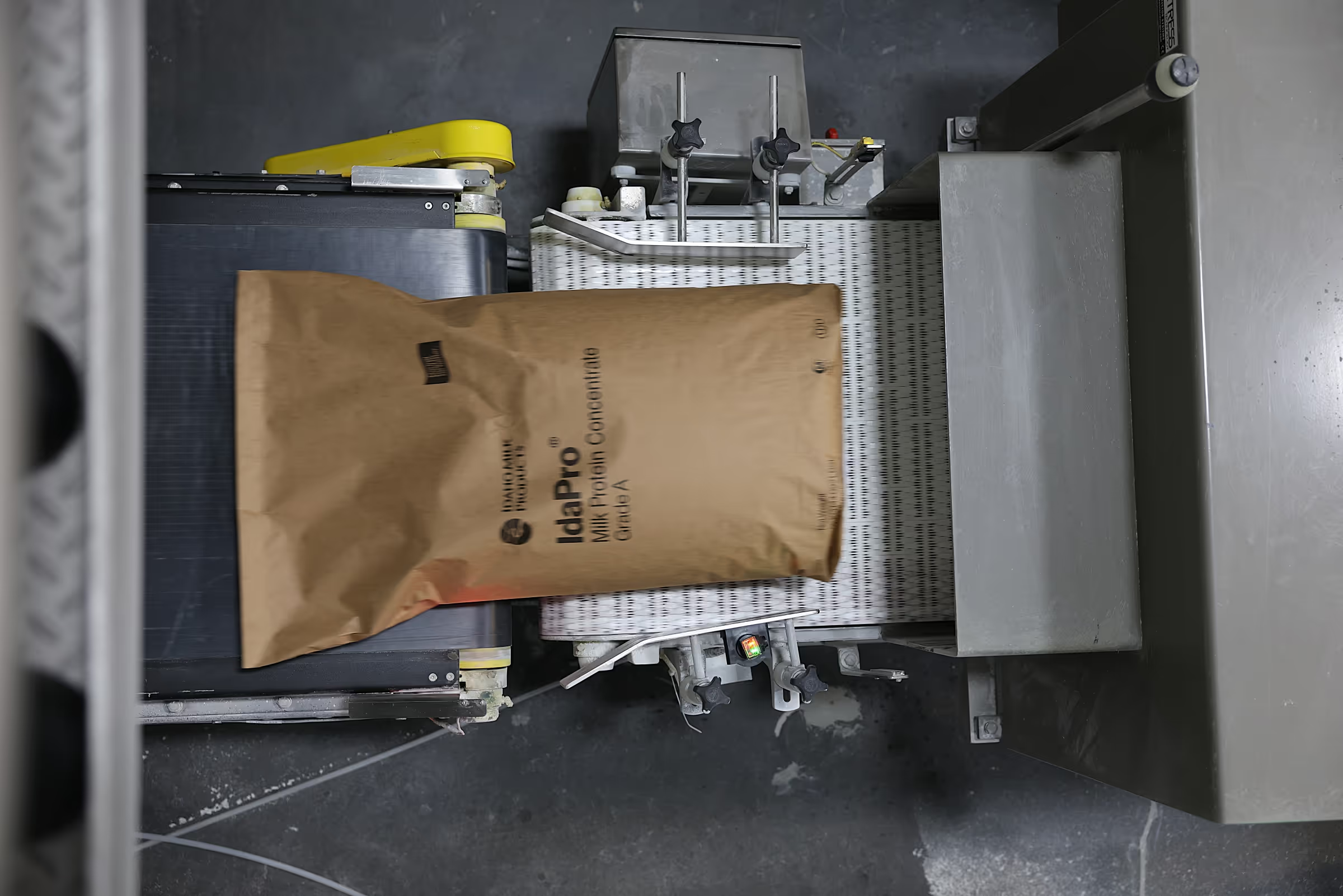
In the world of food science, innovation often comes from identifying high-value components in ingredients we’ve overlooked. For many product developers, that hidden gem is Milk Permeate Powder.
Often overlooked, milk permeate is a co-product of ultrafiltered milk. It is now gaining attention as a strong ingredient. It can boost flavor, lower costs, and support clean-label recipes. We spoke with KJ Burrington, VP of Technical Development at the American Dairy Products Institute (ADPI). We discussed why this underused ingredient should be in your next formula.
Milk Permeate vs. Whey Permeate: What’s the Difference?
While both ingredients are derived from membrane filtration, their origins dictate their performance.
- Whey Permeate: A co-product of cheese manufacturing. Because it comes from cheesemaking, its pH can vary. It may have mild acidic notes. Color can also vary by cheese source.
- Milk Permeate: Derived directly from milk during the production of milk protein concentrates (MPC) or isolates (MPI). Because it skips the cheesemaking vat, it delivers a clean, consistent flavor and even color. This makes it an ideal neutral base for precise product development.
Functional Benefits in Food Manufacturing
"Milk permeate comes with a great package of minerals that people often forget about," says Burrington. Beyond its primary composition, roughly 78–88% lactose, it acts as a functional tool for several key attributes:
1. Flavor Enhancement & "The Maillard Effect"
Permeate is a natural catalyst for the Maillard reaction. When heated with proteins in a formulation, the lactose in permeate promotes browning and develops deep, caramelized flavor notes. It also boosts umami flavor. Natural potassium helps cocoa flavors “pop” in baked goods. This lets developers create richer taste with fewer additives.
2. Natural Sodium Reduction
For brands aiming to shorten ingredient labels, permeate is a game-changer. The natural mineral blend, including potassium, magnesium, and calcium, adds a savory, salty taste. It can reduce the amount of added table salt (sodium chloride) without losing flavor. characteristic that can help offset the reduction of added table salt (sodium chloride) without sacrificing taste.
3. Hydration & Electrolytes
Recent clinical studies show that drinks with milk-based electrolytes hydrate well. In some cases, they beat water and standard sports drinks. Because milk permeate contains naturally occurring sodium and potassium, it provides an "athlete-friendly" electrolyte profile in a clean, dairy-based format.
4. Texture and Shelf-Life
In baking, permeate contributes to better moisture retention and improved crumb softness. Improving fat emulsification, it makes the batter smoother and easier to pour. This helps boost efficiency on large commercial lines.
Technical Considerations for Developers
While versatile, Burrington emphasizes that permeate is not a 1:1 replacement for proteins or fats.
"You have to be mindful of total lactose content in your formula," Burrington notes. "If you exceed solubility limits—typically around 14% lactose in the water phase—you risk crystallization, which can lead to a gritty texture in products like caramels or frozen desserts."
Quick Application Guide
To help your product development team get started, here is a quick guide. It explains how to use Milk Permeate Powder (MPP) in foods and drinks.
1. Sports Drinks and Hydration Beverages
- Primary Function: Natural electrolyte replenishment and isotonic balance.
- Why it Works: The naturally occurring potassium and sodium matrix optimizes cellular water retention without the need for synthetic mineral additives.
- Formulation Tip: Excellent for clear, acid-stable beverages that require a clean, refreshing mouthfeel.
2. Commercial Baking (Cookies, Crusts, and Pastries)
- Primary Function: Natural Maillard browning, clean-label sugar reduction, and moisture retention.
- Why it works: Lactose is a reducing sugar. During baking, it reacts with proteins. This creates a golden-brown crust and a rich, toasted flavor.
- Formulation Tip: Use as a clean-label alternative to eliminate the need for artificial caramel colorings.
3. Confectionery and Chocolates
- Primary Function: Cocoa flavor amplification and ingredient deck optimization.
- Why it works: The unique milk mineral profile, specifically potassium, acts as a natural flavor potentiator, accentuating chocolate notes and allowing for a shorter, cleaner ingredient label.
- Formulation Tip: Replaces more expensive dairy solids or bulking agents without sacrificing sensory quality.
Conclusion: Tapping Into Untapped Potential
Milk permeate is more than a byproduct. It is a cost-effective ingredient with real function. It also supports clean labels and natural nutrition. Whether you are standardizing dairy solids or looking to amplify flavor profiles, it is time to take a second look at this dairy staple.
Interested in deepening your technical knowledge of the dairy industry? Check out the ADPI Dairy 360 course, a comprehensive, industry-standard program covering everything from farm practices and sustainability to global supply chain management.