A Truck Full of Water
Picture a milk tanker rolling into a dairy plant in southern Idaho before the sun comes up. It's loaded with fresh raw milk from local farms. It looks like a truck full of milk, but here's the surprise: it's mostly a truck full of water.
About 86 out of every 100 pounds of the raw milk our farms ship is plain water. The good stuff, like the protein, fat, minerals, and natural milk sugar, makes up only about 14 pounds.
One of the first steps at the plant is separating off the cream. What's left is skim milk, and about 90 out of every 100 pounds of that is water. To turn it into a dairy ingredient that can travel the world and last on a shelf, almost all of that water has to go.
That sounds simple. Just heat it up, right? Not quite. Some milk proteins are delicate. Heat them the wrong way, and they clump, scorch, or lose the very qualities that make them valuable. Remove the water the slow, expensive way, and your energy bill goes through the roof.
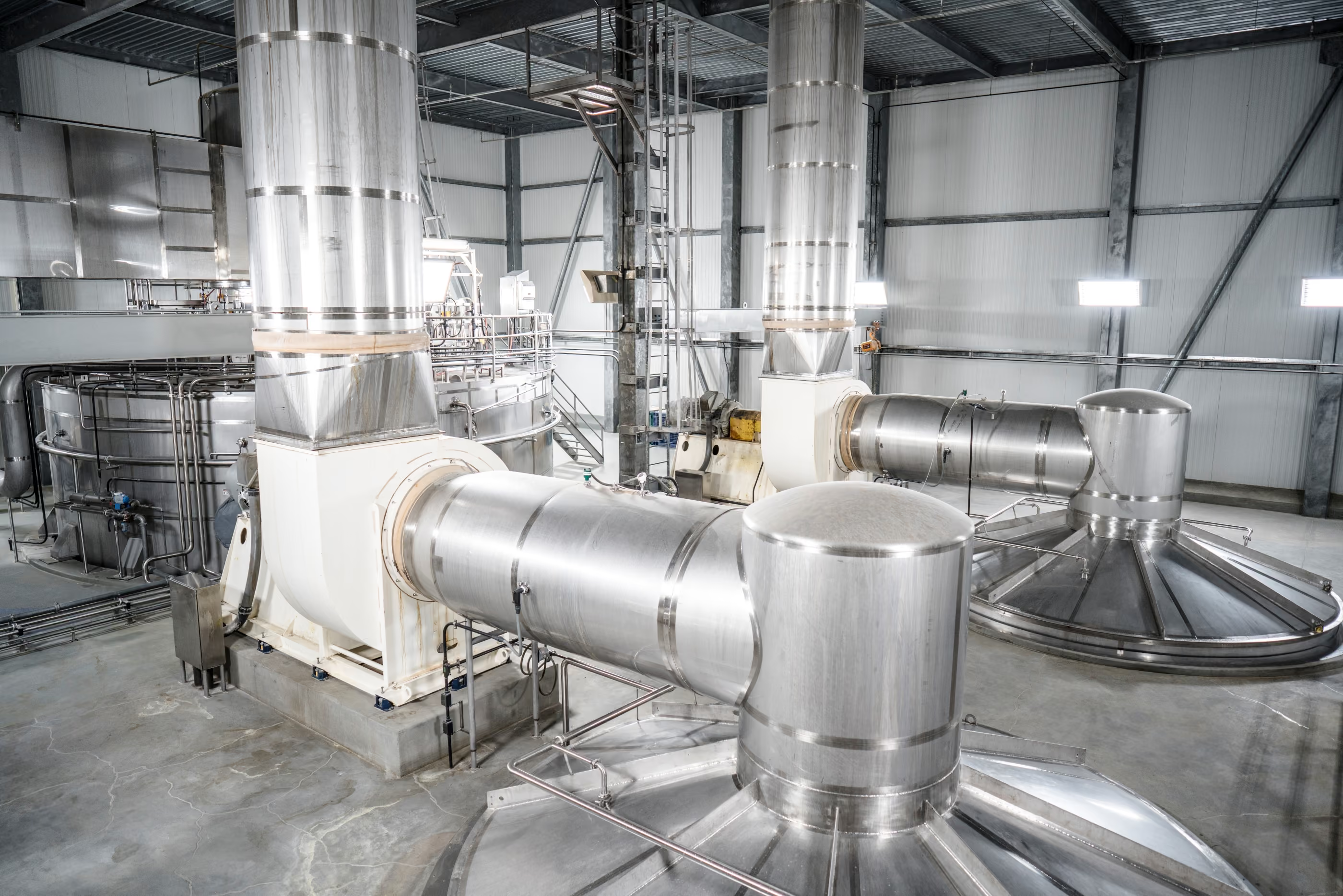
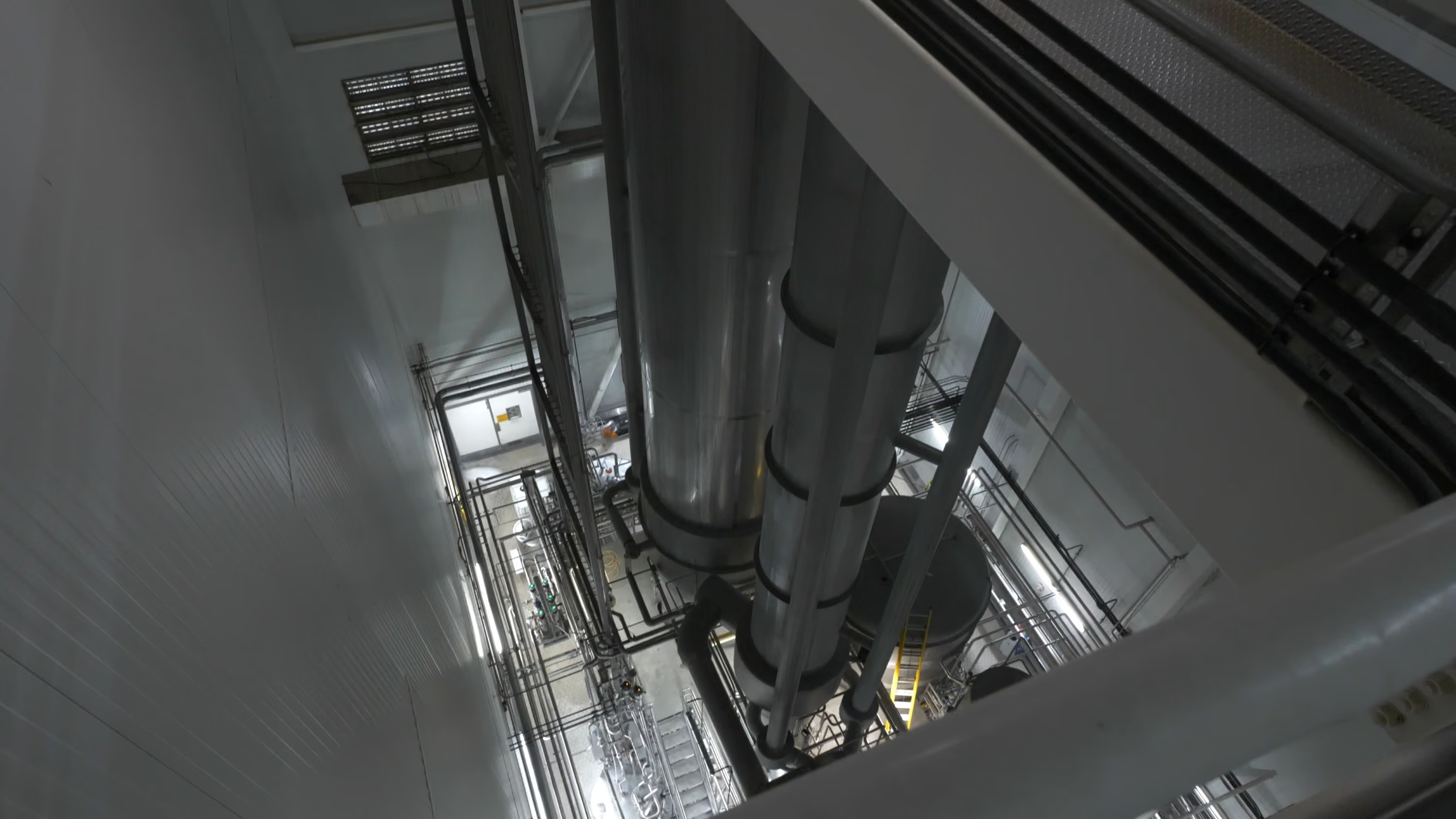
So how do dairy processors pull off this balancing act every single day? A big part of the answer is a machine most people have never heard of. It's a stainless steel tower built around tubes that can run up to 20 meters (about 65 feet) long, and it quietly does much of the heavy lifting. It's called an evaporator, and this is its story.
Why Not Just Dry the Milk?
Most milk powders finish their journey in a spray dryer, a huge chamber that mists liquid into very hot air. The tiny droplets dry almost instantly and drift down as powder. It's a remarkable machine, but it uses a lot of energy for every pound of water it removes.
Asking a spray dryer to do all the work would be like tossing a dripping wet towel straight into the clothes dryer. It would eventually dry, but it would take a long time and cost a lot. The smart move is to wring the towel out first.
Dairy plants wring out the water with two main tools: membranes and evaporators. Removing water before the dryer pays off in several ways:
• Far less energy. Removing water with membranes and evaporators takes only about 10–12% of the energy a spray dryer would use.
• More powder, faster. With far less water to remove, the same dryer can produce much more powder per hour.
• Better powder. Without first concentrating, powder particles would be very small and full of air, mix poorly, and last less time on the shelf.
Two Streams, Two Tools
At Idaho Milk Products, filtering the skim milk splits it into two streams, and each one gets the tool that suits it.
Membranes for protein. After the skim milk is pasteurized, it passes through special filters called membranes. Think of them as incredibly fine strainers. They let water, natural milk sugar, and some minerals pass through while holding on to the protein. The protein-rich liquid is concentrated with membranes and then dried into powder. It thickens quickly as water comes out, a little like going from pouring milk to pouring honey, so it's dried while it can still flow.
The evaporator for permeate. The stream that passes through the membranes becomes milk permeate, which is rich in natural milk sugar. Reverse osmosis removes some of the water first, and then an evaporator removes more. After that, the milk sugar crystallizes, and the permeate is dried into a powder.
So at our plant, the evaporator's main job is permeate. Here's how it does that job.
How an Evaporator Works
Evaporators are used across the dairy industry to concentrate liquids ranging from milk to permeate. An evaporator looks like a giant stainless steel tower. What happens inside comes down to two simple ideas.
Idea One: Boil Water Without High Heat
You may have heard that water boils at a lower temperature at high altitudes. That's because there's less air pressure pressing down on it. An evaporator uses the same trick. Pumps pull air out of the tower to create a vacuum, so the water boils at roughly 105–160°F, depending on the stage. That's anywhere from bathwater to hot coffee, nowhere near a rolling boil.
Idea Two: Spread It Thin
Inside the tower are long, narrow tubes. Milk is spread across the top, coating the inside of each tube. Then gravity takes over, and the milk slides down as a thin film while steam heats the tubes from the outside. A thin layer heats up quickly and gives up its water quickly.
Put those ideas together, and you get a process that's both gentle and fast. Milk spends less time in contact with hot surfaces than it would in other types of evaporators, and it leaves most of its water behind as vapor. That vapor cools back into water, which is polished and reused at our plant.
Using the Same Heat Again and Again
Here's where evaporators get really clever. When water boils off the milk, it becomes hot vapor. In a basic setup, that heat would simply be wasted. Modern evaporators put it back to work.
Most dairy evaporators are built as a series of chambers, called effects. The hot vapor from the first chamber heats the milk in the second. The vapor from the second heats the third, and so on down the line. Each chamber runs at a slightly deeper vacuum, so it can boil milk at a slightly lower temperature. In the end, the same heat gets used several times over.
Many newer evaporators go a step further with large electric fans that draw off nearly all of that vapor and compress it, raising its temperature by a few degrees so it can heat the milk again. Once the system is up and running, it works much like a heat pump. It needs very little fresh steam beyond what's used to heat-treat the liquid before it goes in. Compared with a conventional six-effect steam evaporator, this approach can cut operating costs roughly in half, and electrically driven evaporators are now widely used.
From Vacuum Pans to Steel Towers
The idea of concentrating milk under vacuum is about 170 years old, and as the story goes, it started with a tragedy. In 1851, an American inventor named Gail Borden Jr. was traveling home from London when the cows on board got sick. Several children on the ship reportedly died after drinking their milk.
Borden wanted a way to keep milk safe without refrigeration. He learned that a Shaker community in New York was using a vacuum pan to concentrate liquids at low temperatures. He tried the same idea with milk, and after years of trial and error, he patented his method in 1856. His condensed milk went on to feed soldiers during the Civil War.
Since then, the technology has come a long way:
• Slow batches in vacuum pans gave way to continuous systems.
• Falling-film towers became the industry standard.
• Membrane filters joined the process, opening the door to today's high-protein ingredients.
• Mechanical vapor recompression, powered by electric fans, is helping plants cut the steam their evaporators need.
Modern evaporators are also built to strict cleanliness standards, with smooth stainless steel and automatic cleaning systems that keep every surface food-safe.
The Quiet Giant Behind Better Food
Let's go back to that tanker truck pulling in before sunrise. Most of what it carries is water, and nearly all of that water must be removed before the milk can be powdered into dairy ingredients.
The evaporator is a big part of that. It borrows a trick from the mountains to gently boil water. It spreads liquid thin so the job goes quickly. It reuses its own heat to save energy. And it protects the quality of what's left behind.
Most people will never see an evaporator. But alongside the membranes that handle our protein, it does quiet, essential work every day.
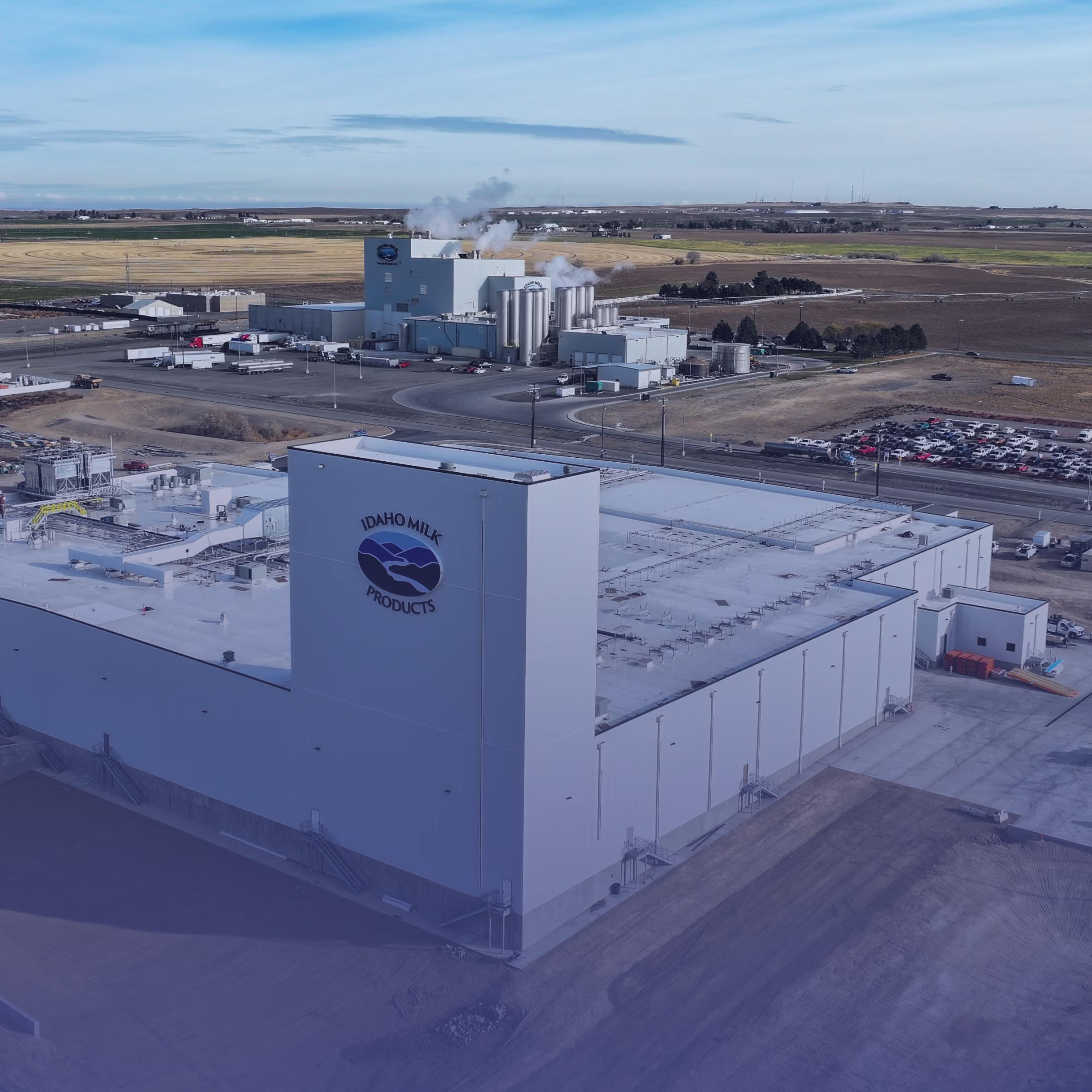
At Idaho Milk Products, that's what our mission to make better food possible is all about: careful, smart processing that turns fresh Idaho milk into ingredients people can count on.