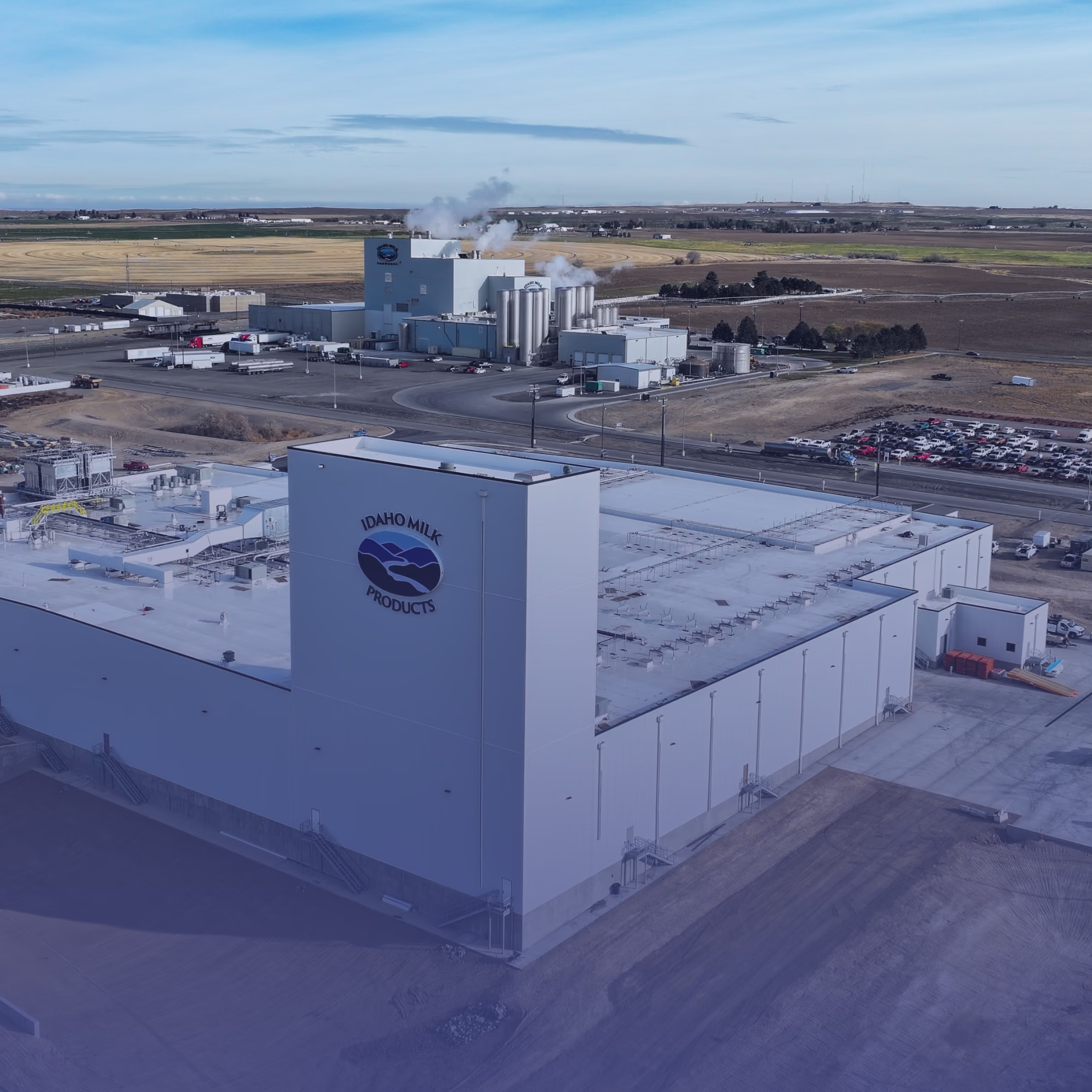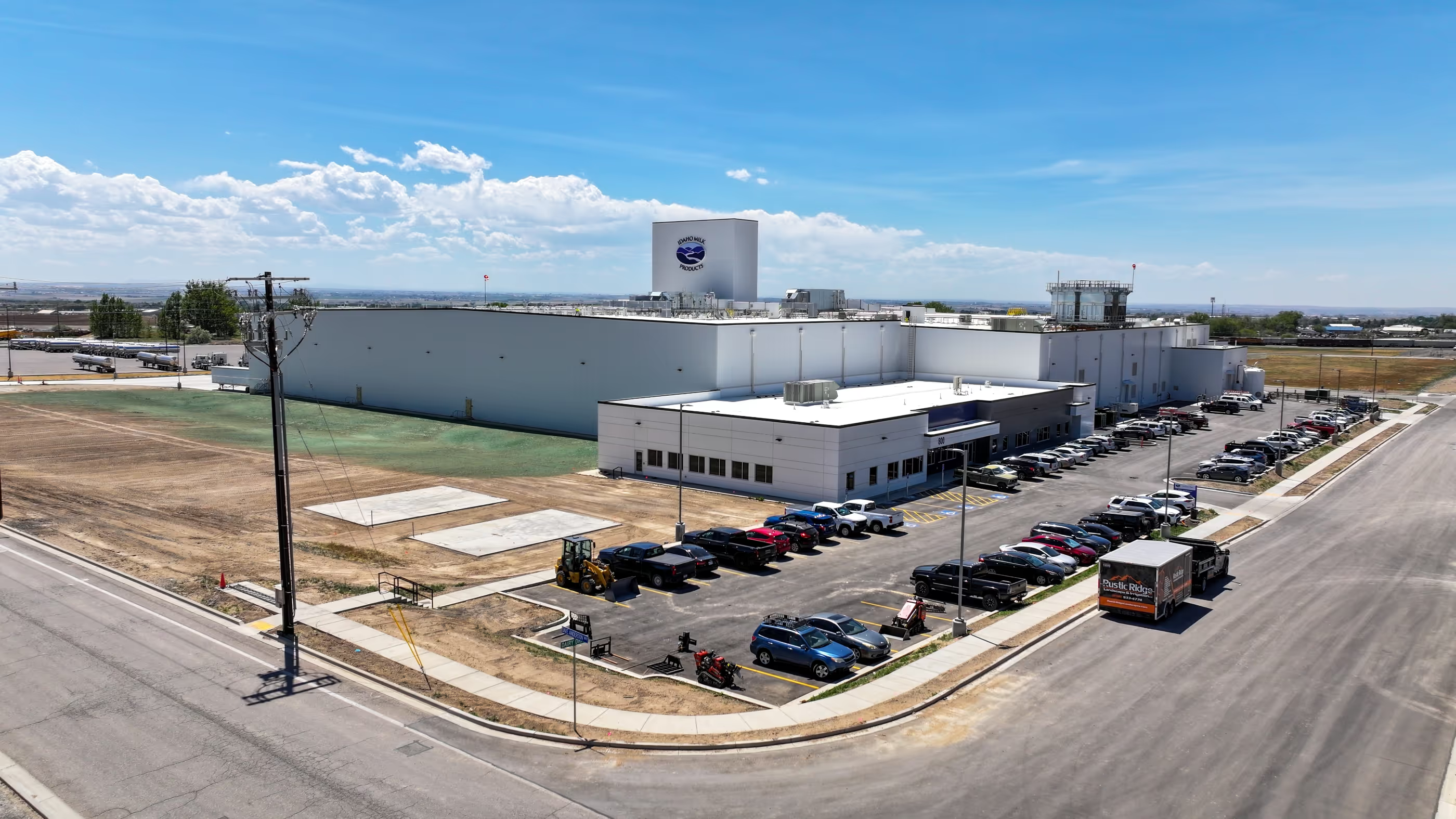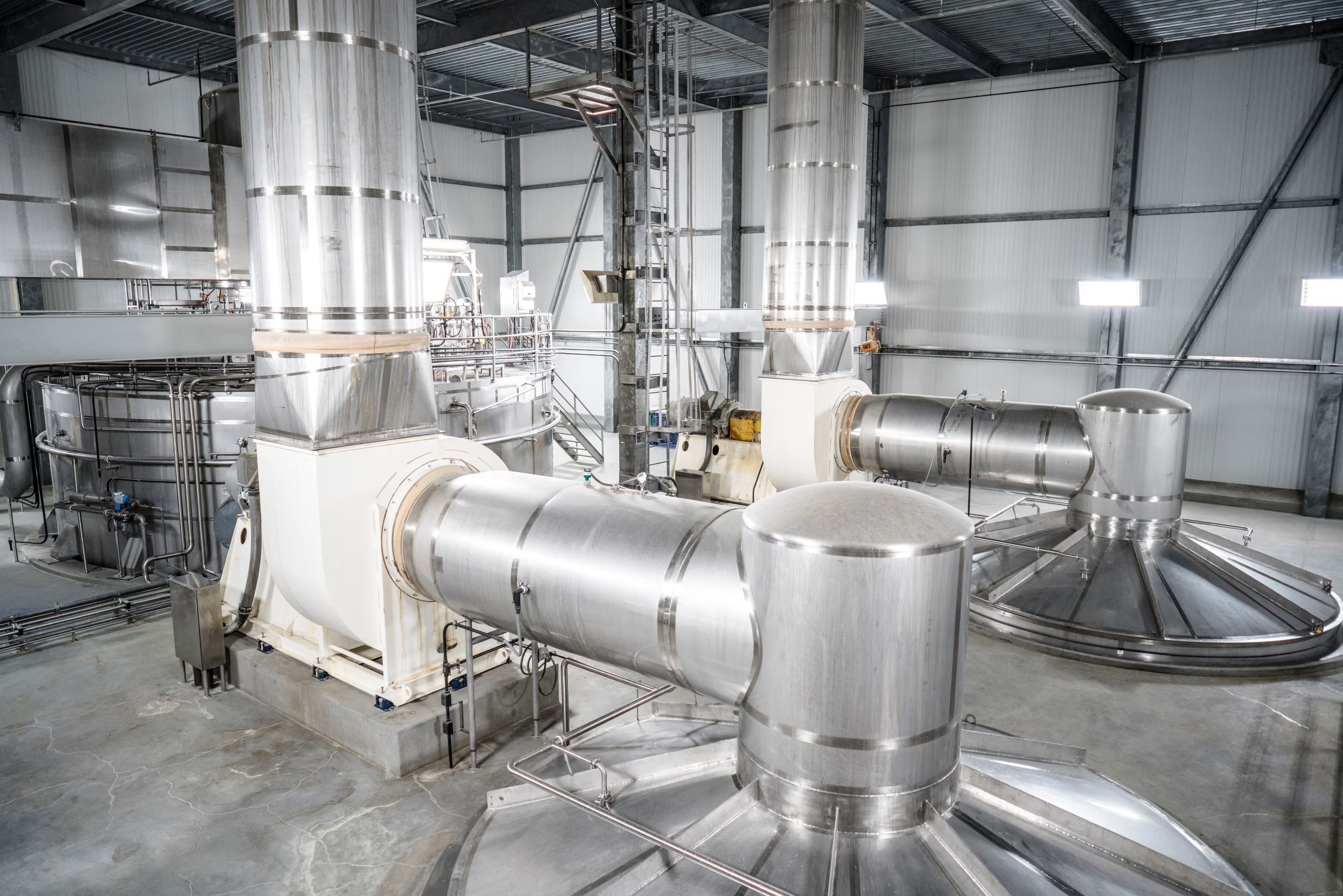
Walk through our milk protein plant in Jerome, Idaho, and one thing stands out right away. The silos, the pipes, the tanks, and the processing lines: nearly everything that touches milk shines with the same silver finish. That is stainless steel, and it is there for a reason.
At Idaho Milk Products, we turn fresh milk from our owner-dairies in the Magic Valley into Milk Protein Concentrate (MPC), Milk Protein Isolate (MPI), Milk Permeate Powder, and fresh cream for food and beverage manufacturers worldwide. Our customers count on ingredients that are clean, consistent, and true to the milk they came from. That depends on the people who run our plant, the dairies that supply it, and the processes we follow every day. It also depends on the metal those processes run through.
Why stainless steel, and not something else? The answer involves a century of dairy history, a little chemistry, and a lot of practical experience.
Dairy before stainless steel
It is easy to take today's equipment for granted, so it helps to remember what dairies used in the past. In the late 1800s and early 1900s, milk was handled in vessels and pipes made of copper, tinned copper, brass, cast iron, mild steel, glass and even wood. Each had serious flaws.
Copper was popular because it moves heat about 25 times faster than stainless steel, which made heating and cooling milk quick. The problem is that milk is slightly acidic, and it pulls copper ions out of the metal. Even trace amounts, well under one part per million, accelerate the oxidation of milk fat, producing stale, cardboard-like, or metallic off-flavors.
To stop that, the industry coated copper with a thin layer of tin. Tin is soft, though. Daily scrubbing and acidic milk wore it away, exposing the copper underneath, and the equipment had to be taken out of service regularly for re-tinning.
Iron and mild steel rusted, shedding iron into the product and developing tiny pits where bacteria could hide. Wood absorbed milk fat and moisture and could never be truly sanitized. Glass was clean and nonreactive, but it could crack under sudden temperature changes, posing a risk of broken fragments. Aluminum was light and inexpensive, but strong alkaline cleaners attacked it, thinning its walls and roughening its surfaces.
In short, every material forced dairies to choose between food safety, product quality, and uptime. Stainless steel ended that trade-off.
What makes stainless steel "stainless"
Stainless steel was developed in the early 1910s by Harry Brearley in Sheffield, England, and by researchers at Krupp in Germany. By definition, it is an iron alloy containing at least 10.5% chromium, and that chromium is the secret.
When chromium meets oxygen in air or water, it forms an extremely thin film of chromium oxide across the surface of the steel. This "passive layer" is only a few nanometers thick, thousands of times thinner than a human hair, yet it shields the iron in the steel from reacting with water, milk, or cleaning chemicals.
The layer also repairs itself. If the surface is scratched, the exposed chromium reacts with oxygen and the protective film reforms. Paint and tin coatings can chip and flake. Stainless steel protection is part of the metal itself, so there is no coating to chip off.
Built to be cleaned, again and again
Food safety is the biggest reason stainless steel dominates dairy processing. Bacteria naturally present in raw milk can attach to surfaces and form protective slime layers called biofilms, which make them harder to remove.
The best defense is a surface with nowhere to hide. Stainless steel is non-porous and can be polished to an extremely smooth finish. Industry standards from 3-A Sanitary Standards call for product-contact surfaces with an average roughness of 0.8 micrometers (32 microinches) or smoother. On a smooth surface, bacteria have little to grip, and cleaning solutions can sweep them away.
That combination of smoothness and durability is what makes clean-in-place, or CIP, possible. Before CIP spread through the dairy industry in the 1950s and '60s, workers took pumps, valves, and pipes apart by hand, scrubbed them, and put them back together. CIP instead circulates cleaning solutions through the equipment while the equipment remains fully assembled.
Few materials could survive that routine day after day. Cleaners used across the dairy industry attack aluminum, copper, and carbon steel. Stainless steel can withstand it, which is why it became the standard for CIP and why automated cleaning can be consistent and repeatable without tearing down equipment.
Protecting the milk's natural flavor and purity
Our milk proteins start as fresh Grade A milk, and membrane filtration does the core work of separating and concentrating the protein. That process only means something if the equipment around it is just as clean and just as neutral.
Properly maintained stainless steel does not react with milk in any meaningful way. Unlike copper or iron, it does not release metal ions that accelerate fat oxidation, nor does it impart metallic tastes or odors.
For our customers, that neutrality is the point. A company building a protein shake, a bar, or yogurt needs our ingredients to taste like milk and nothing else.
Strong enough for the work, built to last for decades
Dairy processing is hard on equipment. Product and cleaning solutions swing from refrigerated temperatures to near boiling and back, and pumps push fluids at high pressure, cycle after cycle. Stainless steel has the strength to handle temperature swings, vibration, and pressure, and it resists cracking, warping, and wear.
Stainless steel costs more up front than carbon steel, aluminum, or plastics. But well-built stainless equipment commonly stays in service for decades, and it never needs paint or coatings that could chip off and contaminate the product. Over its life, it is often the more economical choice.
It is also fully recyclable without losing its properties, and new stainless steel typically contains a significant share of recycled metal. Equipment that lasts for decades and then returns to the supply chain is a good fit for a company built around sustainable milk processing.
Why it matters to us and to you
Today, stainless steel is more than a smart choice in dairy. Stainless steel lets us protect that milk through every step of our process: filtration, concentration, drying, and packing. It keeps our ingredients safe, preserves their flavor, and keeps our plant running reliably for the customers who depend on us.
The next time you see a photo from inside our Jerome facility, look past the shine. What you are really seeing is a century of lessons learned, built into equipment designed to deliver milk ingredients that are safe, clean-tasting, and consistent.
Have questions about our process or our ingredients? Contact our team — we'd love to talk.